Friday, July 13, 2012

Did you know that some of the first Chocolate Beans came from Costa Rica?

Ancient History:
The life story of Chocolate starts a little over 3000 years ago. While there are images on Mayan pottery dating back to 1000BC, most historians believe the cacao tree was first cultivated by the Olmecs, who lived in Central America, not far from Costa Rica. Research into their language has revealed the word cacao was used by this Mesoamerican civilization, dispelling the common misconception that the Mayans were the original founders of chocolate.
By 300 AD the Olmecs had vanished and the Mayan civilization was flourishing in the southern part of what is now Mexico. The Mayan civilization worshiped the sacred tree, naming it cacahuaquchtl, and believed the pods were a gift to man from the Gods. Writings that survive today describe the cacao as the gods’ food, and many drawings show cacao pods being used in rituals and ceremonies. After the demise of the Mayan civilization, the Toltecs occupied the same region; followed by the Aztecs who conquered the Toltecs in 1325. When the Aztecs discovered the cacao beans that the Toltecs worshiped and transformed into drink, they named the beans cacahuatl, meaning “sun beans”. Cacao beans were used primarily as currency and a beverage at
this time. The beans were so valuable, they were the only permitted form of payment of taxes levied by the Aztecs rulers.

Both the Aztecs and the Mayans concocted a foamy drink with the cacao, and spiced it with chili, allspice, honey or vanilla. The beverage was enjoyed mostly by the elite upper class as it was an expensive luxury. In 1502, cacao beans were first discovered by a European – Christopher Columbus. He was offered cacao beans in trade for goods of his own. His confusion over these “almonds” being used as currency led the chief of Guanja to prepare xocolatl for him, which he apparently found bitter and distasteful. While he did not initially realize the beans were edible, he did report that they were being used as a form of currency, and returned to Spain with some beans. When he presented his find to King Ferdinand and Queen Isabella, they were not pleased with the cocoa drink either, and thus Spain did not pursue the import of cacao beans for several decades.

Journey to Europe
In 1528 Cortes returned to Spain, bringing with him cacao beans and necessary equipment to produce Xoclatl for Charles V. Initial reactions to the dark, bitter
liquid were once again not positive, but with the addition of sugar cane and some spices such as cinnamon or vanilla, the drink began to gain acceptance with the royals and nobles. Adding to the development, the Spaniards created a tool called a molinillo which made whipping the chocolate in to the frothy beverage much easier increasing its popularity.

For the next 80 years Spain controlled the import of all cacao beans, and they began to cultivate them in other areas near the equator such as Costa Rica, Trinidad, Haiti, Mexico, Java and the Caribbean. Because growing and processing beans was very profitable for the Spanish colonists, they were careful to protect their knowledge of working with cacao. The processing of the beans was performed by Spanish monks in the colonies until 1580 when the first chocolate processing plant was set up in Spain.

Chocolate Becomes Vogue Throughout Europe
In the early 1600’s, chocolate began spreading across Europe, first to Holland then to Italy, Germany, Great Briton, France and Switzerland. As a result these empires began cultivating and producing chocolate in their own colonies. During this period in history, cocoa was known as a clerical fasting beverage, because the Catholic Church permitted consumption of cocoa during lent as a nutritional substitute. It was still believed to have medicinal and restorative properties, as well as to be an aphrodisiac.

Evolutionary Changes
The 1700s brought the evolution of chocolate processing with the invention of the steam engine, which made possible the grinding of the cocoa beans by machines. This allowed large quantities of beans to be processed with relatively little labor, causing a decrease in the price. Within 30 years the price of cocoa dropped so significantly that cocoa was available to nearly everyone.
Nearly 100 years later, the cocoa press was invented by the Dutch chemist Coenraad Van Houten. The press allowed for even more economical prices on cocoa. It squeezed out cocoa butter, leaving the cocoa powder, which made cocoa both more consistent and less expensive to produce.
Chocolate was produced in the American colonies as early as 1765, when the first chocolate factory was built. Dr. James & John Hannon who joined together for one of the earliest machine-based chocolate manufacturing businesses. Using an old grist mill, they ground cacao beans into chocolate liquor and pressed the paste into cakes to be used for drinking chocolate. Their company was originally known as Hannon's Best Chocolate. When Hannon was lost at sea during a cacao-buying voyage to the West Indies, the company was renamed the Baker Company (Baker’s Chocolate) and remained in the Baker family until it was bought out by General Foods in 1927.

Making things Easier to Eat
In 1847 the first solid chocolate bar was created. It was made by combining some of the melted cocoa butter with cocoa powder and sugar, creating a paste that could be pressed into a mold. The chocolate bar was so popular that people soon began to think of eating chocolate as much as drinking it.
In 1876, Daniel Peter of Switzerland was attempting to devise a way of adding milk to chocolate, but couldn’t create a mixture that would combine smoothly. At the same time, Henri Nestlé was working on a concentrated infant food formula, which required him to find a way to treat milk so that it would not spoil while in storage. He invented powdered milk, which turned out to be the perfect milk form for Peter's purposes; the low water content made it possible to mix it with the chocolate into a bar that did not spoil. By 1879, the two men had joined to form Nestle.
In 1879, Rudolphe Lindt invented a process called "conching," which drastically improved the texture of chocolate by making it more blendable early in the processing. This machine was made of a shell-shaped granite bed, and had rollers that moved back and forth grinding the chocolate liquor, sugar and (if used) milk into a paste that was the smoothest ever created. Soon, conching was adopted as a standard part of the chocolate-making process. Originally, the friction of the rollers heated the paste as they ground it, which served as preliminary roasting. Because of the importance of the roasting process, today’s conching machine rollers are cooled so that the roasting time can be controlled with precision.
The 1900’s saw the creation of Hershey’s chocolate bars (1893), filled bonbons (1913), Perugina and Valrhona chocolate companies (1922), Godiva Belgian chocolates (1926), Toll House cookies (1930) and army “D-Rations” (1941). Chocolate is now eaten by children and adults all over the world, and comes in many flavors, styles and packages. It continues to evolve with the proliferation of vintages and “single origin” chocolates at the beginning of this millennium.

Initial Production Time
When it is time to harvest, the pods are cut from the tree trunk by hand using a machete. For pods higher up on the tree, a long handle with a small curved blade is used to gently separate them from the trunk. Care must be taken not to damage the other pods or flowers on the tree, as the tree is frail and its roots are shallow. The pods are collected in baskets and brought to a central location. Within a week, all pods are split open, often with a wooden club to avoid damaging the beans inside the pod, and the contents removed. The pods will usually yield 40-60 beans each, depending on the variety of the cacao. When dry, it will take approximately 400 beans to make one pound of roasted beans.

Fermentation
Beans and surrounding white pulp are removed from the pod and piled high, to promote fermentation. Fermenting piles are often covered with banana leaves and stirred periodically to promote aeration and fermentation. After a day, micro-organisms, in particular yeasts, begin to grow on the beans. The yeast converts the sugar of the pulp into ethanol, and the bacteria then oxidizes the ethanol, causing the temperature of the pile to rise and the beans to turn brown. By the second day the pulp begins to break down into a liquid and drain away. At this point, the bean has died from the heat and the oxidization. Bacteria continues the process of oxidation as more and more air fills the spaces previously occupied by the pulp. The death of the bean causes cell walls to break down and different parts of the bean to merge together. These newly combined substances cause chemical reactions which enhance the color and flavor characteristics in the bean. The entire fermentation process for Criollo beans is 2-3 days, and for Forastero usually 5 days.

Drying
When fermentation is complete, the beans have a moisture content of 60% which is much too high- drying will reduce that to 7.5%. Drying is done traditionally by spreading the beans out on the ground or a table and allowing the sun to do the work. More modern techniques include drying rooms and heated tables where temperatures can be strictly controlled. The beans should be dried slowly to allow completion of the chemical reactions that began in fermentation, but not so slowly that moulds develop. During the drying process, the beans are continually turned to help prevent mold and provide sufficient aeration. Once the beans are dried, which usually takes one to two weeks, they are scooped into bags and from there the beans go to the chocolate manufacturers.

Quality Checks
The cacao undergoes quality tests at several stages along its journey. The first stop after drying is when the plantation sorts the beans according to size. Only the premium beans command top pricing in the market. The local co-ops and plantations sell to brokers in London, Amsterdam and New York, who then act as middlemen selling to the manufacturers and chocolate companies. The beans are tested usually by sampling 300 beans per metric ton. The sample is weighed and the beans are cut open to reveal any mold or pests and to determine the extent of the fermentation. Every company has standards that define the tolerances for defective beans in a lot. As a final test, the liquors are tasted by a professional panel who evaluates the aromas and flavors of the beans.

Transformation at the Chocolate Maker
Once the beans are ready to be processed, it takes at least 2 to 4 days to manufacture a single candy bar. Though processes may differ from maker to maker, the overall process is common to most. Because each maker blends beans to his unique specifications, makers segregate their beans by type and origin. When they are ready to process, the cocoa beans are cleaned to remove any debris or dried pulp that may remain, and then they are graded and sorted by size. Any shriveled or double beans are discarded.

Roasting
Next the beans are roasted in large rotating cylinders to bring out the chocolate flavor and color. The roasting can take 30 to 120 minutes, usually at 250 degrees or higher. This is a critical step where chocolate makers add their own signature to the process, by varying the temperature, moisture and time the beans are roasted. The longer the roasting the stronger the flavor, but over-roasting will rune the bean and make it bitter.

Winnowing
Once roasting is complete, the beans are put into a winnowing machine where they are passed between two large cones that crack the brittle shells without crushing the nibs. A fan inside blows and separates the hard outer shell from the cocoa nib. As a part of this process, the winnowing machine sifts through the nibs and separates them by size.

Grinding Machine
Once sorted, the nibs are crushed by large steel discs or grinding stones. The heat generated by the friction melts the cocoa butter which becomes cocoa liquor (cocoa particles suspended in cocoa butter). The cocoa particles at this point are approximately 50-70 microns in size, which is still detected as grainy on the tongue. This liquor if solidified would be pure unsweetened chocolate. The temperature and degree of milling varies according to the type of nib used and the product required.
Some liquor will be used for purposes other than eating chocolate. For this portion, the cocoa liquor is pressed at 6,000 pounds per square inch to extract the cocoa butter, producing a residual solid mass called cocoa presscake. The extracted cocoa butter is used in the manufacture of eating chocolate, while the cocoa presscake is ground finely to form cocoa powder. For the liquor that will go on to become chocolate, the addition of cocoa butter will be the next step. Other ingredients such as sugar, milk and emulsifying agents such as lecithin, are also added and mixed. The amount of cocoa butter depends on the type of chocolate being made. The cocoa butter and cacao solids together make up the coco percentage that is now being emblazoned on many labels. The higher cocoa percent in the finished chocolate, the more intense the flavor will be and the lower the sugar content.

Mixing of Liquor and Other Ingredients
The chocolate mixture is then put through a refining process, traveling through a series of huge steel rollers until a smooth paste is formed. The size of the chocolate particles is reduced to 14-20 microns at this stage, which greatly improves the mouth-feel of the final chocolate. The substance that comes out of this mixing process is surprisingly dry and powdery.

Conching
The next process, conching, further develops the flavor and texture by promoting chemical transformations in the chocolate. This process was developed first by Rodolphe Lindt around the turn of the century. Conching is a process of kneading and agitating the chocolate, which can be completed in as little as 5 hours at the more commercial facilities, but can take as long as 3 days at the more artisan manufacturers. During this process, cocoa butter is sometimes added to further enhance the smoothness of the end result. The speed, duration and temperature of the kneading also affect the flavor affect the chocolate in ways not fully understood.

Finishing
As a final stage before molding, the mixture is tempered by a series of heating, cooling and reheating steps. This prevents chocolate bloom by realigning the cacao butter crystal formations. The chocolate is now ready to be molded as a whole bar or used to enrobe fillings.

How to make Chocolate:


Costa Rica Chocolate History:

The decade of 1950's
Costa Rican Cocoa Products began with the clear mission to industrialize the national of cocoa beans in Costa Rica. In order to make this happen the founders acquired the Harrick's company with its products and chocolate drinks naming it The Costa Rican Cocoa Products. The production of cocoa powder begins, as well as the making of chocolate coating for the industry. Also the first exports of cocoa butter are sent to Colombia and the United States.

The decade of 1960's
For the 1960's the company mission was: "To expand operations to Central America." In order to reach this goal they built bigger and more modern plant in Zapote where they could start the chocolate bar production. They expanded their distribution by opening distribution facilities in different countries of Central America.

The decade of 1970's
The mission for the 1970's was key to the development of the company since it was defined as "Product diversification and vertical integration." For this, the Ruiz family acquired cocoa farms from which they could produce their own chocolate. Later they realized that it was more profitable to import the raw materials. Then in 1977, the distributor company, Diasa was founded. This was a major breakthrough since they were able to develop their own sales force and distribute the product all over the country. Also during the seventies, as sales increased the owners saw the need for the automation of the line of "chocolates bañados", and bought new machinery to start manufacturing the Perugina candy.

The decade of 1990's
In the second half of the 1990's there was a shift in the vision of the company. The Nestle Company which had acquired Perugina of Italy in 1988, made an offer to buy the plant that Costa Rican Cocoa had in Heredia along with its consumer market product-line. The Ruiz family saw this as a great opportunity to concentrate their efforts in cocoa based products at an industrial level.On December of that same year, the Nestle Company acquired the brand names of Harrick's and Perugina, along with the machinery for their production.The Costa Rican Cocoa Products vision for the second half of the decade is to diversify their industrial product-line in order to continue to fulfill the needs and wants of the national industry and penetrates other foreign markets at competitive levels on the basis of quality and price.The company currently exports its products to all of Central America, the United States, Mexico and Sweden.

Location
The plant and its facilities are located in Zapote in the outskirts of San José, the capital of Costa Rica. The population of San José is around 2.000.000, where the total population of the country is approximately 4 million. The climate of the region is quite mild where in the summer is warmer and in the winter there are sunny mornings and rainy afternoons, so this works well for the manufacturing of chocolate.

Costa Rican Cocoa Co. S.A
In from Multiplaza del Este, Zapote, San José, Costa Rica
(506) 2225-2611 - phone
(506) 2225-7432 - fax
info@costaricancocoa.com

AUTHOR:
Kimberly Barron, originally from Malibu, California has lived in Parismina and Manuel Antonio, Costa Rica for 20 years. Starting as a certified tour guide, she spent 15 years managing fishing lodges on the Caribbean Coast and later 4* & 5* Hotels on the Pacific Coast of Costa Rica. Currently semi-retired, Kimberly still works as the Marketing Director for Byblos Resort & Casino and Hotel Makanda by the Sea.

SOURCES:
http://www.costaricancocoa.com
http://thechocolatereview.com/history-of-chocolate/the-history-of-chocolate.html

Thursday, June 28, 2012

Boutique Hotels in Costa Rica? Should they be Added to the Endangered List?


Popular Byblos Boutique Hotel in
Manuel Antonio, Costa Rica
Walking down memory lane to the 1990’s, Costa Rica welcomed their first world class hotel chain, the Spanish firm known as Barceló. Specializing in the “All Inclusive” style of lodging, this style of travel did not take much of a foothold in this country, and the Boutique Hotel market remained the most popular choice for tourist accommodations. Now we fast forward some 20+ years and Costa Rica hosts more than a dozen major hotel chains! Everything from Marriott, to Best Western, Intercontinental, Hilton, Choice, Hyatt, Wyndham, Four Seasons and the most controversial group….Riu, which now serve as the main players, with more jumping in each year. If that wasn't enough, ICT (Instituto Costarricense de Turismo) has now announced the Grand Openings of some 11 more new Chain hotels, among them Marriott, Hyatt, Hilton, Wyndham, and other recognized names all planned for the GAM (Greater Metropolitan Area) or the already saturated Guanacaste region of Costa Rica.  With the economy barely stumbling along some 5 years now, all tourism areas of Costa Rica have suffered greatly from the world financial crisis, many areas averaging as low as 38% occupancy, which makes it hard to even keep their doors open and meet their financial obligations.  What will become of some of these hotels when the established hotel chains and their huge marketing budgets take over? As expressed by the Vice President of the Costa Rican Chamber of Hotels, Gustavo Araya, "If the (tourism) numbers were more positive, the increase in hotel rooms would not be so worrisome." (Paraphrased and translated by me......sorry.)
Does this mean the Boutique Hotel concept is ready to be added to the endangered list in Costa Rica?

History:
The "boutique" style is said to have been created in New York back in 1984, though
A Lovely Boutique Hotel in Arenal
there are valid arguments that in 1981 both London and San Francisco boasted the first boutique sized hotels. Most likely, 1984 might be when the term “boutique hotel” actually was coined, with the term coming into more mainstream use. Entrepreneurs Ian Schrager and Steve Rubell opened the boutique Morgans New York on Madison Avenue in the heart of Manhattan, and the concept grew by leaps and bounds from there. Morgans was small, stylish and unique, unlike the big brand-name hotels that predominated the markets at that time. The actual term "boutique hotel" was said to be coined by Rubell himself, who described their new hotel venture as being like a boutique as opposed to a department store. A very succinct analogy if you ask me!

Description:
The most defining characteristics of boutique style hotels are that they are generally small properties, with less than 100 rooms and more often averaging between 3 and 50 rooms total. They take great pride in offering
The controversial Mega Riu
Hotel Costa Rica
a super chic atmosphere, unique design and décor, contemporary styling and quite popular these days, a rich historical value or background. Most boutique hotels provide highly personalized service, with very hands-on staff, management and/or ownership, offering a genuine personality that just can’t be found in the large hotel chains. Services can be limited depending on the size and luxury level of the property or you can often find some of the most dynamic local and gourmet restaurants, world class spas, and other unique features that make them stand out from the standard hotel offering. The concept has been so successful, that most multi-national hotel corporations have begun to brand their own chains of boutique resorts in order to try to capture a share of this huge market.

Locations:
Still a popular choice for hotels in Costa Rica, the concept of “boutique”, “design”
The popular Marriott Hotel San Jose
or “lifestyle” hotels, as they are often referred, has spread throughout the world, to include European & East Asian countries, appearing in such places as Indonesia, mainland China, Japan, Iceland, Turkey, India & the Middle East, just to name a few. They continue to remain popular options throughout Central and South America as well or basically anywhere that provides a desirable destination for travel. I am fairly certain that you will find some sort of boutique hotel in almost any corner of the world these days!

Target Market:
There are no longer cookie cutter molds for guests seeking the “Boutique experience”. Travelers are constantly looking for something new and different, while definitely expecting more than the simple comforts once acceptable to the average vacationista.
Award Winning Lapa Rios
Fabulous Boutique Hotel
Whether planning a business trip, destination wedding, adults only escape, or just an overdue vacation, when planning travel, guests more often than not seek properties that are noticeably different in look and feel from the large branded hotels. Boutique hotels now even present a certain level of social branding. Those staying at these establishments are often considered as trendy, daring, fashionable, hip travelers that are quite often more ecologically minded. Since boutique facilities and their pricing can vary dramatically, there are now boutique properties designed to suit every demographic, any price range or social class, always with the idea of creating an unforgettable “guest experience” that just cannot be found in the larger hotel properties.

Competition:
Boutique hotels retain certain benefits when it comes to cost of operations and overall profitability. They often have a large customer base to work with, as well as being favored by smaller travel agencies or tour operators that are looking to sell
Is this really what we want in Costa Rica?
the “experiential” concept that the boutique hotel property has to offer. Since boutique hotel owners do not have to pay a franchise fee to be part of a larger chain, the hotel can often operate with a lower overhead that adding costly amenities such as restaurants, spas and convention & meeting spaces would create. However, these added amenities can generate significant profitability and appeal to the hotel's bottom line, so more often than not you will find every sort of amenity imaginable in todays boutique hotel properties. Another benefit for boutique hotel owners is that well established small properties tend to have a higher rate of repeat and word of mouth business compared to normal industry standards, which can save on boutique sized marketing budgets rarely able to compete with the huge marketing budgets of large branded properties. Nevertheless, successful boutique hotels must continually adapt to the constantly changing trends, needs, tastes, preferences, and technology in order to remain competitive in this cut throat hotel market.

In the end, whether it's the most isolated green hotel getaway, the most unique historical location, the most private white sand beach, impeccable five-star white glove service, or you are just looking for that travel environment that loans their son’s boogey board, gives you cookies from their kitchen, offers the most incredible personalized guest services, or located in the most super chic locale, boutique hotels in every instance cater to their guests every need and whim. Who doesn’t want that kind of attention on their hard earned vacation? If we don't continue to support the Boutique Hotel Industry, Costa Rica could end up looking like this:

Could Costa Rica end up like this?

So for your next Costa Rica vacation, bypass that mega chain hotel and try one of the many Costa Rican Boutique Hotels, you will be personally helping keep these unique properties off Costa Rica’s endangered list!!

If you have a favorite boutique hotel you have visited, please feel free to share it with us in the comments section!!

Author: Kimberly Barron, originally from Malibu, California has lived in Parismina and Manuel Antonio, Costa Rica for 20 years. Starting as a certified tour guide, she spent 15 years managing fishing lodges on the Caribbean Coast and later 4* & 5* Hotels on the Pacific Coast of Costa Rica. Currently semi-retired, Kimberly still works as the Marketing Director for Byblos Resort & Casino and Hotel Makanda by the Sea.

Sources:
www.independent.co.uk
www.travelandleisure.com
www.bizymoms.com
www.travels.com
www.wikipedia.org
www.ehow.com
www.wisegeek.com
www.hospitalitynet.org

Monday, June 11, 2012

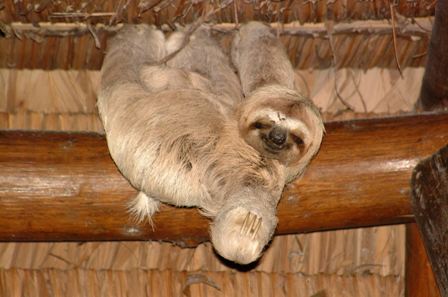
Sloths of Costa Rica...I wish I could be one in my next life!

What the heck is a sloth?
Sloths are slow-moving, medium sized mammals. While they are warm-blooded, their blood is typically colder than other mammals, making them less susceptible to biting insects. Like other mammals, they have live births and produce milk to nurse their young.  Sloths are highly adapted to life in the jungles of Central and South America and are very common in certain parts of Costa Rica. Their diets consist mainly of vegetation, which while plentiful, is not very nutritious. Since they do not get much energy from that diet, sloths have a very slow metabolism. It takes up to 30 days to digest a single meal. Their hands and feet are well adapted to allow them to hang upside-down from trees most of their lives. Sloths will only descend from their arboreal homes about once a week to urinate and defecate.  Can you imagine?
 
Washing Baby Sloths:

The fur of the sloth is another highly specialized adaptation for this animal. The long outer hairs are grooved to allow water to drain away from the body. The hair near the base of their spines crests to form a “drip tip,” which allows rain water to flow off the back. Algae grows in the grooves on a sloth’s fur, providing extra camouflage for the canopy-dweller. Sloth fur also exhibits specialized functions; the outer hairs grow in a direction opposite from that of other mammals. In most mammals hairs grow toward the extremities, but because sloths spend so much time with their legs above their bodies, their hairs grow away from the extremities in order to provide protection from the elements while the sloth hangs upside down.
The Sloths of Costa Rica, also known locally as "Ozos Perezosos" ("Lazy Bears") and not known for being quick and nimble, though they are rather athletic in their own way.  Sloths have short, flat heads; big eyes; a short snout; long legs; and tiny ears. The species found in Costa Rica have stubby tails (6–7 cm long) handy for digging the hole when they defecate, and sloths' bodies usually are anywhere from 50 and 60 cm long.  There is something absolutely fascinating about these big hardly noticeable fur balls that appear too sleepy to budge from their perches in the high tree branches that makes them a favorite of all that have the pleasure to spot one. 

Aviarios del Caribe-Sloth Sanctuary in Cahuita:

Judy Avey Arroyo, a 63-year-old Costa Rica resident (she's originally from Anchorage, Alaska) has spent many years studying these incredible creatures, and this was never even part of her life plan.  In 1992, three local girls near Avey's Caribbean Costa Rica Hotel spotted a three-month-old sloth in the road. The girls carried the orphan to the hotel in search of help, and thus began Avey's study of this misunderstood mammal and her the start of her very popular Aviarios del Caribe Sloth Sanctuary, which has become a cult favorite among sloth enthusiasts and visiting tourism in Costa Rica.

Many of the sloths brought by locals or even travelers from up and down the country’s Caribbean coast to the Aviarios Sanctuary, are just a few months old when they arrive, while others are injured adults. Sometimes they have been badly electrocuted after climbing electrical or telephone cables, or have been crippled by a bad fall, or hit by a car.  There are so few options for these beautiful creatures to rehabilitate in the country, with the only other available sanctuary located on the Central Pacific coast of Costa Rica (recently certified by MINAET, the governing entity in Costa Rica) being located outside of Quepos & Manuel Antonio and is managed by the very popular Kids Saving the Rainforest (kstr.org).  These two facilities are two of only a handful of folks that will even accept these injured animals for rehab and are legally allowed to do so.

Sloths belonging to the Choloepus Genus and the Bradypus Genus arrive to the sanctuaries year round (these are the only types found in Costa Rica). The Choloepus is commonly called a two-toed sloth, although Avey points out it’s more like two fingers, as the animal’s lower limbs each have three toes. The Bradypus has three “fingers” (or "toes") and a sort of smiley face and appears to be wearing a mask around its eyes, so those are not as hard to spot, though both species are difficult to notice when living in the wild.  For both types of sloths, the fingers and toes are curved, claw-like bone appendages with fingernail coatings, which help sloths cling to branches and stuff a variety of tree leaves into their mouths. Sloths can also use the claws for defense against predators, especially should they find themselves on the jungle floor, though the most common predators are the harpy eagles, which can swoop down and snatch these large creatures right off a sturdy tree limb. Although the sluggish herbivores are rarely ever the first to attack, they will eagerly use their long claws if needed for self defense. Their natural self defense is further aided by an algae that grows within their furry coat and helps hide their scent from possible predators, such as ocelots and jaguars.  Naturally, it's humans that have long been one of the sloths' biggest threats, with the continuing loss of habitat.

The three-toed sloth is active during the day, unlike the nocturnal two-toed sloth, and so the three-toed specie is more commonly spotted by passersby. This sloth only eats leaves from trees and lianas, but may feed on one hundred individual trees of up to thirty species, eating leaves of different varying ages. Sloths live, feed, mate, and reproduce near the upper levels of the forest canopy and rarely come down from the canopy except for defecation. They often move to a new tree only to keep balance in their diet, and this is generally only every 2-3 days. Home ranges for sloth individuals can overlap considerably and females tend to be more social than the males. Sloths may prefer different food sources within the same home range, as they tend to feed on what their mothers taught them to eat while growing up.

Though large for an arboreal mammal, the three-toed sloth must also be light for it to be able to live on easily breakable branches where it can sleep for some 12-18 hours per day.  So for that reason, the sloth has overall reduced muscle mass. These unique creatures also have an enormous gut capacity, nearly 30% of their total body weight! The sloth's diet of leaves is digested very slowly, so they need a have this large capacity. Due to their slow metabolism, the sloths have thick fur to insulate them for when their body temperature drops at night.  That is why often you will spot a sloth basking in the sunlight of the day, before curling up in a ball in the tree for the night to conserve their limited energy.
When not sleeping, sloths move only when necessary and even then very slowly.  They have about a quarter as much muscle tissue as other animals of similar weight. They can move at a marginally higher speed if they are in immediate danger from a predator (4 m or 13 feet per minute for the three-toed sloth), but they burn large amounts of energy doing so. Their specialized hands and feet have long, curved claws to allow them to hang upside-down from branches without effort.  In fact, their nails are so adept that hunters can shoot a sloth and it will often remain hanging in the tree!   While they sometimes sit on top of branches, they usually eat, sleep, and even give birth hanging from limbs.
About once a week, the sloth descends from its elevated living space, digs a small hole with its stubby and erect triangular stump of a tail, defecates and urinates in the hole, then covers it with leaves using its hind legs and returning as soon as possible to its safer elevated home. This process lasts less than 30 minutes, but is the most dangerous moments in the sloths life as it is during this time the sloth is most vulnerable to predators. While mortality of young sloths is high, individuals that survive are recorded to live as long as 9-11 years in captivity, and as many as 20-30 years in the wild.

Several kinds of moths have a symbiotic relationship with this species and live as adults on the sloths. These arthropods leave the sloth to deposit their eggs once a week on the sloth's dung, at which time the hatched larvae feed on the dung, pupate, and later emerge as adults, to fly in search of another sloth to make their home. A single sloth may carry 1000 or more species of moths, beetles, mites and other small insects you do not want to share your skin (or bed) with! 
Because of the cyanobacteria and other parasites, sloth fur serves as a small ecosystem all its own.
 
Adult males are characterized by a patch of shorter hair on their backs that is colored pale to bright yellow, with a dorsoventral black stripe through the center. Adult females lack such a marking, so that is the easiest way to determine the sex. It is essentially impossible to distinguish the sexes of young and juvenile sloths because there is no external genitalia.

An adult female spends approximately half the year pregnant and the other half rearing her single (but on rare occasion twin) offspring. Young sloths can begin eating leaves when they are only two weeks old. As the mother carries the young with her, she shows it which trees and lianas are fit to eat within their home range and when the baby is around 6 months old, the mother suddenly leaves the young to her home-range and moves to establish her own new home range nearby. The young and mother maintain contact through vocalizations, and the young continues to use this portion of the mother's range for a while and then eventually gives up the bond and departs to live on its own.  Their home range can contain over 100 favorite types of meals for the sloth, but by far the most common would be the Cecropia (Guarumo in Spanish) tree, which also happens to be the easiest to spot these beautiful animals due to its large open limbs.

Thank Claire Trimer-Sloth Wrangler

The History of  a Costa Rican Sloth Sanctuary by Judy Arroyo:
Over twenty years ago a small sloth was brought to my door. I cupped the tiny animal in my hands and knew I had to do something. This baby sloth, who many of you know as Buttercup, was dying of starvation. Her mother was most likely dead and I was faced with a huge challenge. At the time, little was known about sloths, much less baby sloths. I was advised to let the baby go, that I would not be able to feed her, that I would only be prolonging the inevitable. I looked down at her little face and knew that I would do anything in my power to save this tiny sloth.

Buttercup had a few difficult months. Using books, common sense and intuition, I was able to concoct a diet that brought her into adulthood. Today, she holds the record of being the sloth to live the longest time in captivity. She reigns supreme over our veranda at the Sloth Sanctuary.
As the years passed, we became the “sloth people”. Orphaned and injured sloths were brought to us for rehabilitation. In 1997 we started an educational program to teach local people and tourists that baby sloths are bad pet choices. We raised awareness about poaching and habitat destruction. The Sloth Sanctuary became a gathering place and international hub for sloth research.
Today we are responsible for over 130 sloths. Many have been maimed by electric wires, or tortured by cruel humans. They require our constant attention. We love taking care of these adorable gentle animals, but we need your help.
Please consider supporting us as we care for these beautiful animals, and become a virtual member of our team. Help us raise awareness in our local community so the needless cruelty and the pain will stop. 
You can learn more about the Aviarios del Caribe Sloth Sanctuary or make a donation at http://www.slothsanctuary.com/.  The sloths thank you!!
Also,  for those aficionados of sloths that just can't get enough of these adorable creatures, I definitely recommend you join http://www.slothville.com for the latest and cutest to be found in the sloth world! 
And for those that live or will be visiting the Manuel Antonio area, please don't miss the chance to volunteer in our area at  the ever popular Kids Saving the Rainforest found at Hotel Mono Azul or check it out at http://www.volunteer4kstr.org!!  They can arrange individual or groups tours of the sanctuary with their resident veterinarian and helpful and enthusiastic volunteers!
Author:
Kimberly Barron, originally from Malibu, California has lived in Parismina and Manuel Antonio, Costa Rica for 20 years.  Starting as a certified tour guide, she spent 15 years managing fishing lodges on the Caribbean Coast and later 4* & 5* Hotels on the Pacific Coast of Costa Rica.  Currently semi-retired, Kimberly still works as the Marketing Director for Byblos Resort & Casino and Hotel Makanda by the Sea.
Sources:
Animal Planet

Thursday, May 24, 2012

I'm "sweet" on Costa Rican Mangos! They're everywhere!!

Mangos (or tropical peaches) are among the most widely produced and consumed fruits in the world.  Introduced to Costa Rica in 1796, limited exportation started in 1980, but this fruit still remains primary grown for national consumption. Production estimates put mangoes between 40 and 50% of all the fruit in the world produced for juice, canning and fresh consumption. Originally cultivated on the Indian subcontinent, mangos are now produced along the equatorial band throughout the world, with Mexico currently holding the title as the largest exporter of fruit and Costa Rica boasting of a robust crop that is mostly enjoyed nationally.

The mango tree itself is a truly a remarkable work of Mother Nature, with cultivated specimens living for 300 years or more, and
reaching heights of 120 feet, with tap roots that can push 20 feet into the earth.  The fruit is also a wonder of tropical evolution with a large center seed, a thick protective exterior skin and a
juicy and wonderfully peach like flavor and texture.  Fruits with a more fibrous flesh often develop this less desirable texture when grown with hard water and/or chemical fertilizers.

To be permitted into the USA, fruit must undergo a process called Hot Water Quarantine Treatment to kill any fruit fly larva or mature insects. This is a process where the fruit is submerged in 115°F water for 55 to 110 minutes. This treatment process is ideal for the growing trade in organic mangos as it adds no artificial inputs to the post harvest process.  Some countries have opted for irradiation method instead, exposing the fruit to low levels of radiation to eradicate and possibility of existing fruit flies. These fruits will not qualify for the "organic" seal of approval.

There are dozens of cultivated varieties of mangos that fall into three broad
groups in a typical USA produce department. The smallest group is the green cooking mango, which is used primarily in Southeast Asian recipes, or "Ticos" enjoy these sliced and dipped in salt. There is also a reddish green skinned variety which is generally quite large, as well as bright yellow skinned smaller fruits, the latter two which will start green but change coloring when the fruit is ripe and ready to eat. One popular variety is known as the Hayden.  This reddish green skinned variety is plain in appearance externally but extremely flavorfully and less stringy and fibrous than most other varieties, so it is a top international seller.


Another popular variety of Mango is known as the Francique, common to the island of Haiti (Hispaniola). This yellow skinned
variety is common throughout Costa Rica, and has a smooth melon-like texture and is widely regarded as the sweetest of all mangos. Harvested green, the Francique turns full yellow as it ripens, and provides an outstanding aroma and flavor. Mangoes are a key element of sustainable agriculture, providing soil retention on land and/or  hillsides that are vulnerable to erosion, especially in challenging terrains like those found in Haiti.
When selecting a good mango you should take advantage of your senses. The fruit should be uniformly firm to the touch with no soft spots or visible bruises. When completely ripe, the yellow varieties will be a uniform yellowish red color with no remaining green
areas, while the green varieties will retain some green, with a purplish coloring indicating it's level of ripeness.   For those that prefer a slightly tart Mango, the color does not need to be uniform from the stem to the flower end of the fruit, even the green coloring can provide a wonderful sweet surprise! The red blush on some varieties is due to direct exposure to sunlight and may not be a factor in the quality or ripeness of the fruit, so one has to learn which varieties suit them best. An important sense to engage when picking the perfect mango is the sense of smell.  A ripe mango has a full, sweet fragrance easily indicating its readiness for consumption. Keep in mind that most tropical fruits, mangos included, can discolor and lose much of its flavor if refrigerated, so it is recommended to keep them at room temperature.
Most people would likely consume more mangos if they were not so difficult to
peel.  The cubed method is the easiest for quick and clean preparation.  Slice the mango along the flat part of each side of the large elongated center seed. You will end up with the flat seed center and two shallow cup-shaped pieces from each side holding the bulk of the delicious flesh.  With a sharp knife, cut criss cross lines in the flesh of the mango, being careful to cut all the way to the skin, but not through it. You then invert the skin inside out, and the flesh will pop up in cubes making them easy to cut off of the skin or eat right from the skin by scraping with your teeth.

If you have the space, Mango trees make handsome landscape specimens and huge, efficient shade trees. They are erect
and fast growing and the canopy can be broad and rounded, even providing good overhead coverage in tropical zones inclined to sudden rainstorms. They are considered a large tree, often some 65 ft. across their canopy. The tree is long-lived with some specimens known to be over 300 years old and still fruiting. In deep soil the taproot descends to a depth of 20 ft, and the profuse, wide-spreading feeder roots also send down many anchor roots which penetrate for several feet and make this specimen very sturdy in otherwise normally unstable terrain.

The yellowish or reddish flowers of the Mango tree are borne in inflorescences, in dense clusters of up to 2000 tiny flowers. Pollinators are flies, hoverflies, and bees.  Normally only a few of the
flowers in each inflorescence are perfect, so most do not produce pollen and are not able to produce fruit.  Do not worry, these trees still produce an abundance of eatable fruit over a prolonged period of time.  Be warned though, these flowers often cause allergic and respiratory problems for sensitive persons, so this should always be taken into consideration if planning on growing your own mango tree (or when living near them).
Mango peel and sap contain urushiol, the chemical in poison ivy and poison sumac that can cause urushiol-induced contact dermatitis in susceptible people. Cross-reactions between mango contact allergens and urushiol have been observed. Those with a history of poison ivy or poison oak contact dermatitis may be most at risk for such an allergic reaction. Urushiol is also present in mango leaves and stems. During mango's primary ripening season, it is the most common source of plant dermatitis.
To grow mangos from seed, remove the husk and plant the seed (before it dries out) with the hump at soil level. The
seeds normally germinate in two to four weeks, and will bloom and bear in only three to six years. Mango fruit matures in 100 to 150 days after flowering. The fruit will have the best flavor if allowed to ripen on the tree. Otherwise, the fruit ripens best if placed stem end down in trays at room temperature and covered with a dampened cloth to avoid shriveling. Mangos generally ripen in June from a January bloom, and October to November from an April bloom. The main nutrients in mangos are
Calcium, Copper, Fiber, Iron, Magnesium, Vitamin A, B6 and C.  The fruit can either be eaten by itself or paired with light meats like pork, chicken or shrimp, or added into desserts. Mango is also a nice addition to fruit salads, juices and smoothies. Pureed mango tastes delicious in muffins and cookies and is popular as baby food as well. The mango is also famous for processing into chutney, so you can see that it has many many wonderful uses!
So the next time you find yourself wandering your local supermarket aisle, visiting your local farmers market, or even better, walking around Costa Rica at the right time of year......grab that mango and enjoy the world's most popular fruit!   Happy eating, and remember that beauty can be more than skin deep!!

Enjoy this delicious and easy recipe from this local Costa Rican Hotel that keeps forever when well sealed in your freezer!
Simple Mango Sorbet
2 fresh, ripe mangos
1 cup sugar
3 tbsp coconut milk
1 tsp lemon juice
About 1 cup whipping cream

Peel and deflesh the mangoes , chop roughly. Blend mango with sugar until well pureed. Add coconut milk and lemon juice. Remove from blender.  Pour whipping cream into blender and whirl until the cream forms  stiff peaks.  Add the mango puree and whirl for 10-20 seconds. Pour into container and freeze for 8 hours, stirring every 1/2 hour for the first 3 hours to prevent uneven freezing.

Author:
Kimberly Barron, originally from Malibu, California has lived in Parismina and Manuel Antonio, Costa Rica for 20 years.  Starting as a certified tour guide, she spent 15 years managing fishing lodges on the Caribbean Coast and later 4* & 5* Hotels on the Pacific Coast of Costa Rica.  Currently semi-retired, Kimberly still works as the Marketing Director for Byblos Resort & Casino and Hotel Makanda by the Sea.

Wednesday, May 9, 2012

Costa Rica's Second National Flag.....the Ecological Blue Flag Award!!

Mother Nature had a hand in making Costa Rica’s beaches beautiful, but the local government of Costa Rica continues to encourage businesses and citizens to help these same beaches remain clean and beautiful thanks to the Bandera Azul Ecologica (Blue Ecologic Flag) program.

Created in 1996 with the goal of preventing, stopping and cleaning up the  pollution that threatened the health of both people and the environment, great strides have been made to safeguard the public and diverse ecologies of Costa Rica.  Over the last 16 years important measures have been taken to certify more beaches nationwide, surely making Mother Nature proud and enabling the continued promotion of Costa Rica as a World Class eco-tourism destination.

The Blue Flag Ecology Program functions as a multi-agency venture of numerous Costa Rican government institutions.  Some of these include the Costa Rican Tourism Institute (ICT), Ministry of Environment (MINAE), Insituto Costarricense de Alcantarillas y Acueductos (AyA), Ministry of Public Health (MINSA) and National Tourism Chamber (CANATUR), along with the members of local communities who personally strive and sacrifice to achieve the Blue Flag certification. Under the administration of the National Blue Flag Commission, these organizations have achieved certification on an ever growing list of beaches, schools and businesses receiving this prestigious award.

No easy feat to even qualify to win the Blue Flag Certification, Costa Rican beaches are evaluated on a strict criterion under the Blue Flag Ecology Program. Beaches are assessed on water quality of not only the ocean, but the drinking water, waste disposal,


sanitary facilities, signage, tourist safety, environmental education and the involvement of the community regarding beach maintenance.
The PBAE evaluated each beach based on 7 different aspects: quality of seawater (35%), quality of water for human consumption (15%), sanitary quality of the coast, which included garbage (10%), domestic sewage (15%), industrial sewage (5%), environmental education (10%), and safety and administration (10%).  Only beaches with a 90% score can receive the coveted Blue Flag award.  Based on the performance across these seven dimensions, each beach is then given a grade of 1 to 5 stars.

Out of the some 126 beaches that competed for the award, of the eighty winning beaches, only two of them got a top of the line 5 star grade. These were Punta Madero and Blanca, located in Guanacaste and Puntarenas respectively.


Although the Blue Flag Ecology Program was founded with the idea of improving education and awareness regarding the environment, the program has grown to provide a great sense of pride and accomplishment for not only the countries beaches, but local businesses, schools and other tourism operations. Every year more and more beach communities (and businesses) compete for the Blue Flag designation, furthering the original goal to include non-coastal communities, as well as non-tourism projects.

A total of 80 beaches from all over the country received the ecological blue flag award this year during the 16th ceremony of the Ecological Blue Flag Program (PBAE), which took place last March 28th at the Double Tree Hotel in Puntarenas.

For the first time, the Costa Rican Institute of Tourism (ICT) held an exclusive

ceremony for the beach category, as a way to honor the hard work of the winning committees. In the past, the ceremony was held at the Presidential House, as part of a community event, so this added recognition was greatly appreciated by the beach comittees involved.

Today Ecological Blue Flags fly proudly over these Costa Rican beaches scattered throughout the country. Environmentally conscious tourists can now make an educated choice to spend their vacation dollars in locations that take pride in offering a healthy and environmentally friendly ambiance to their visitors. 

So, hats off to our government agencies and their hard work and take a bow all you beaches, schools and businesses that through your hard work and perserverance have achieved this undeniably pretigious Ecological Blue Flag award.  Felicidades!!

PBAE’s Grading Criteria

One star (A): If it gets a score between 90 – 100%

Two stars (AA): If it gets a score of 100% and also has: warning signals for national and international tourists, surveillance and first aid services during weekends and high seasons.

Three stars (AAA): If it meets the requirements for two stars, and also has: public showers and bathrooms, touristic information center, comfortable and safe access for people with disabilities.

Four stars (AAAA): If it meets the requirements for three stars, and also has: recycling and solid waste separation programs, cleaning actions to prevent vector-borne diseases, permanent surveillance and first aid services, and Local Emergency Committee, as well as participation in AyA’s Sanitary Quality Stamp.

Five stars (AAAAA): If it meets the requirement for three starts, and also has: designated parking for people with disabilities, ramps or synthetic rugs to access the beach, Tourist Police services, and participation AyA’s Sanitary Quality Stamp program.

Author:
Kimberly Barron, originally from Malibu, California has lived in Parismina and Manuel Antonio, Costa Rica for 20 years.  Starting as a certified tour guide, she spent 15 years managing fishing lodges on the Caribbean Coast and later 4* & 5* Hotels on the Pacific Coast of Costa Rica.  Currently semi-retired, Kimberly still works as the Marketing Director for Byblos Resort & Casino and Hotel Makanda by the Sea.

Friday, April 27, 2012

Waiting for the Rainy Season to Start? Just listen for the "Yigüirro", Costa Rica's National Bird!

Costa Rica, a relatively small country, has some of the best bird watching opportunities in the entire world. The Official List of the Asociación Ornitológica de Costa Rica contains 857 species registered for an area of only 51,100 km2.....that's smaller than the state of West Virginia! This means Costa Rica boasts the greatest density of bird species of any continental American country, more than you can find in all of the United States and Canada combined!

This would bring visitors to believe that the Costa Rican


National Bird would be one of the more colorful and impressive species found in this small paradise......maybe a Resplendent Quetzal? A Keel Billed Toucan? Scarlet Macaws? Perhaps a Fiery Billed Ari Cari? But nooooo.......Costa Rica's National Bird is the Clay Colored Robin!!

If a plain old Robin sounds pretty boring for a National Bird, you would be right!! This rather dull colored and outwordly unimpressive bird is the last one you would think would represent a country with such an abundance of species to choose from as it's representative "ave".

In general appearance and habits, the Clay Colored Robin (scientific name: Turdus Grayi) resembles other thrushes such as the

American Robin. Averaging 9-10.5 inches in length, and weighing around approximately 6 ounces, the plumage is a dull brownish color, with a faintly streaked throat. The bill is greenish-yellow with a dark base, the legs are faint pink or flesh-colored, and the irises are reddish---all useful identification points, but just further proof that this is just a boring brown bird!

But wait!! Unbeknownest to most foreigners, the Clay Colored Robin has special abilities that make this species a very popular

bird throughout Costa Rica. In fact, in 1977, the Costa Ricans chose the "yigüirro" as a national symbol (over many much more colorful birds that inhabit this paradise) due to its strong and melodious song that always comes during the start of the rainy season. Due to it's tendency to comfortably live near houses and settlements, this species ability to "call in the rains" is not only handy for local farmers but everyday folk as well, so keep that umbrella handy!

In Costa Rica, the clay-colored robin is most commonly found in the Central Valley in human-altered areas like gardens and coffee plantations, but this species can be easily found countrywide. The bird has increased its range up over 6,500 feet in areas where forest has been cleared, so from sea level to higher elevations, the Clay Colored Robin gets around!

The typical robin's nest consists of a cup made of strips of vegetation bound with mud. A clutch is two or three eggs, with

incubation around 13 days. The young leave the nest after 13 more days, weighing a mere two ounces or so, looking much like their parents with some additional spots on the wings and breasts. Two or three broods are possible over the course of a productive nesting season.

Although not as bold as the robins of North America and Eurasia, the Clay-colored Robin in Costa Rica is still a friendly garden bird. They forage on the ground for worms and other invertebrates but tend to eat more fruit than other common robins. Clay-colored Robins will gorge themselves on backyard fruiting trees such as Oranges and Guayabas and also visit fruit feeders, so they are not hard to attract at all. These birds nest at the end of the dry season so their young can benefit from the abundance of food available at the start of the wet season.

The "Yigüirro" song is also considered good luck and a blessing. Yiguirros are probably one of the bird species that practice more the ECC or "Extra couple coitus", which means that both males and females look for mating with other birds out of their couple. The yiguirros can be quite territorial, which is one of the reasons they can be heard singing a lot, as they have to mark their territory or their couple will easily forget about them. Besides that, yiguirros have many beautiful songs used for different purposes, such as when threatened, when looking for a mate, before they go to sleep, at sunrise and even the peculiar rain call that they are famous for. Some of these songs are very complex phrases, full of color, which made yiguirros very popular caged song birds. For an extensive variety of these bird songs click here!

So if you’re coming to Costa Rica for some birdwatching activities, you’ll definitely want to keep an eye out for the ubiquitous

Clay Colored Robin, and for even more convenience you will know when to be carrying your umbrella. You might also want to have a copy of the new field identification guide published with Zona Tropical and Cornell University Press. It’s small enough to fit in your back pocket, yet deals with essentially all the species that one might see from the mainland. The illustrations alone will often suffice for identifying the bird you have just seen, but, on the facing page of each plate, range maps and texts are provided that should help to clinch the ID of whatever bird you are seeking. Of course, the book is available at Amazon, but you might want to consider ordering through ABA Sales, so that some of the proceeds will go towards supporting birding activities and conservation efforts.

So in summary, birding in Costa Rica is an extraordinary experience, offering bird enthusiasts unique opportunities within relatively short distances, involving very diverse habitats in the six ornitologic regions of the country, from sea level to high mountains.


Exciting guided tours and itineraries take you to wonderful locations where you are able to enjoy the best of birding and nature found in the middle of nowhere, or around literally every Costa Rican hotel throughout the country. And don't forget to listen for the melodious song of the famous Yiguerro, or you could get stuck in a rain shower without your umbrella!!


Author:
Kimberly Barron, originally from Malibu, California has lived in Parismina and Manuel Antonio, Costa Rica for 20 years. Starting as a certified tour guide, she spent 15 years managing fishing lodges on the Caribbean Coast and later 4* & 5* Hotels on the Pacific Coast of Costa Rica. Currently semi-retired, Kimberly still works as the Marketing Director for Byblos Resort & Casino and Hotel Makanda by the Sea.